Rio's Metro vs Uber: Which One I Actually Used Every Day
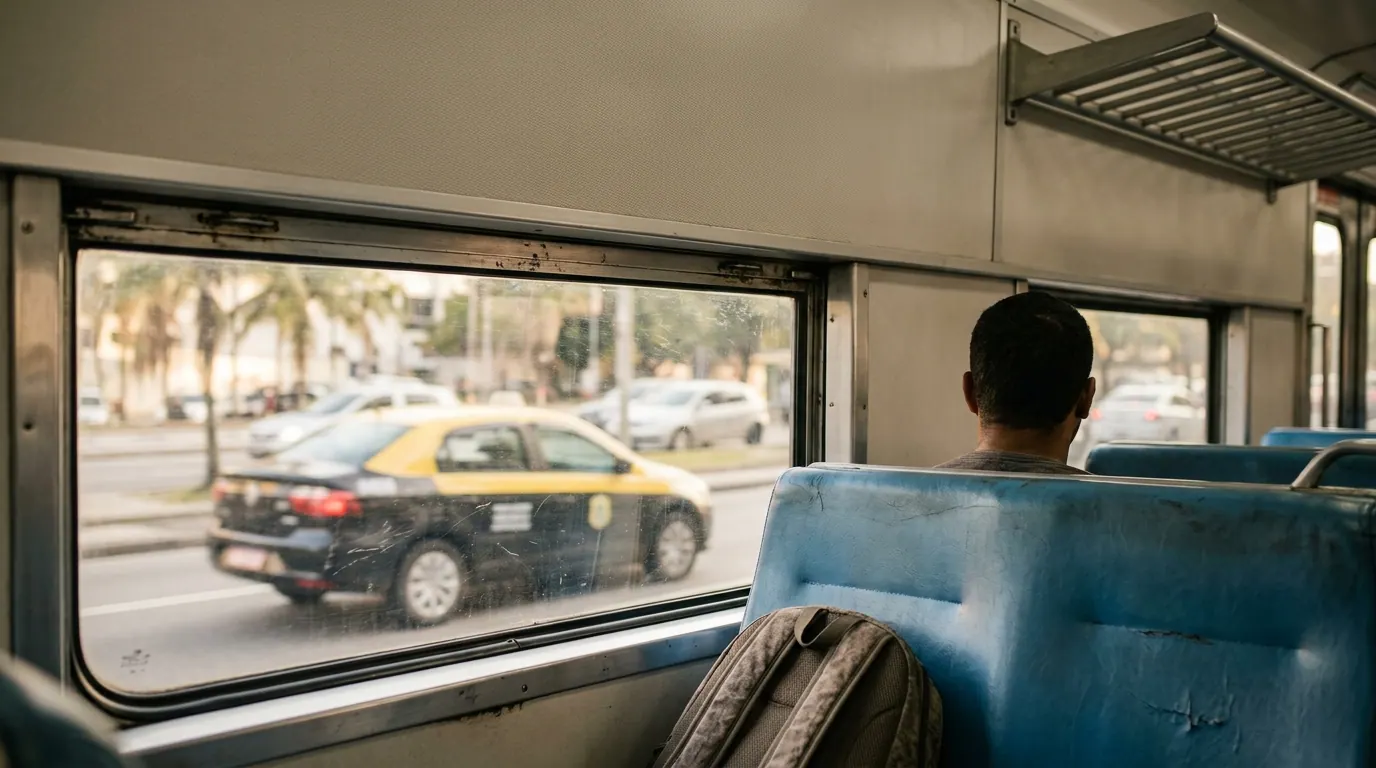
Generated (Gemini), via Wikimedia Commons
I used the Metro for anything near a station and Uber for everything else. That split held up for most of my time in Rio, and it's the one I'd tell a friend to plan around before they even land.
The short answer
Metro during the day for Zona Sul and Centro trips, Uber at night and for anywhere the rail lines don't reach. Rio's Metro is clean, fast, and cheap, but it only covers a narrow strip of the city. Lines 1 and 4 run through Ipanema, Copacabana, and out to Barra da Tijuca, with Line 2 connecting north to Maracanã and beyond. If your trip is inside that corridor and it's daylight, the Metro wins on time and cost almost every time. Once you're outside that corridor, or once the sun goes down, Uber takes over.
What changes the timing
A few things push the decision one way or the other.
- Time of day. Rio's Metro currently runs from early morning until around 11pm on weekdays, with shorter hours on Sundays. Anything late night or early morning defaults to Uber by default, not by preference.
- Luggage. Dragging a suitcase down escalators and through fare gates is doable but annoying, especially at busy stations like Cinelândia or Estácio. Arriving or leaving with bags pushed me toward Uber even during Metro hours.
- Distance from a station. The Metro network is small compared to the city. If your hotel or destination is a 15-minute walk from the nearest stop, that walk changes the math, especially in heat or rain.
- Group size. Traveling with two or three people, an Uber split can come out close to Metro fares, sometimes cheaper. Traveling solo, the Metro is almost always the better deal.
Signs you are overdue for a switch
A few patterns told me I'd picked the wrong option for that particular trip.
- Standing on a platform checking the time because service has slowed and I'm now cutting it close for a reservation or flight.
- Realizing my route needs a bus transfer to reach the nearest station, which usually means Uber would have been faster door to door.
- Opening the Uber app and seeing surge pricing during rain or rush hour, which is the moment to check if a station is nearby instead.
- Walking more than 10 minutes each way to reach a station, which erases most of the time savings the Metro offers.
What happens if you get it wrong
Getting the choice wrong in Rio isn't dangerous, usually just inefficient or a little more expensive than it needed to be. Taking an Uber for a short hop that the Metro covers directly means paying more for a ride that sits in traffic, especially along the Copacabana and Ipanema beachfront during peak hours. Taking the Metro when you actually needed a car, say late at night or with heavy bags, means a longer walk on either end and a transfer or two that eats up the time you were trying to save.
The bigger cost shows up with safety judgment rather than money. Rio is generally fine to move around in during the day, but some stations and their surrounding streets feel different after dark, particularly around Central do Brasil or some of the northern zone stops. I didn't take the Metro late at night as a rule, not because something happened, but because an Uber drops you at the door and a station walk at 11pm doesn't need to be a variable I'm managing on a trip.
What actually cost what
Fares change over time, so treat these as rough ranges rather than fixed numbers. A single Metro fare in recent years has run somewhere in the R$5 to R$8 range, and it covers transfers between lines without an extra charge. Uber fares inside the city varied a lot depending on traffic and time of day, but short to medium trips commonly landed somewhere between R$10 and R$40. Late at night or during rain, that could climb higher. For a short solo hop during the day, the Metro usually won on price by a wide margin. For anything requiring a transfer, a long walk, or a late departure, the price gap closed fast, and Uber's convenience made up the difference.
How I actually used them
In practice, mornings and early afternoons were Metro days. I'd use it to get from Copacabana to Centro for sightseeing, or out to Barra when I wanted to see that side of the city. Evenings, especially after dinner, I switched to Uber without much thought. It wasn't a rule I set in advance, it just became the natural pattern once I saw how the city's transport actually worked at different hours.
If you're planning a trip and trying to decide which to rely on, the honest answer is both, used for different parts of the day. That's the approach I've written up before on Window Seat World, and it held true again this time. Check the Metro map against your hotel location before you book, and keep the Uber app ready for everything the map doesn't cover.
New trip reports as they land
First-person routes, costs and photos from trips actually taken. Join the list.
Join the list