How I Got From São Paulo to Rio Without Flying
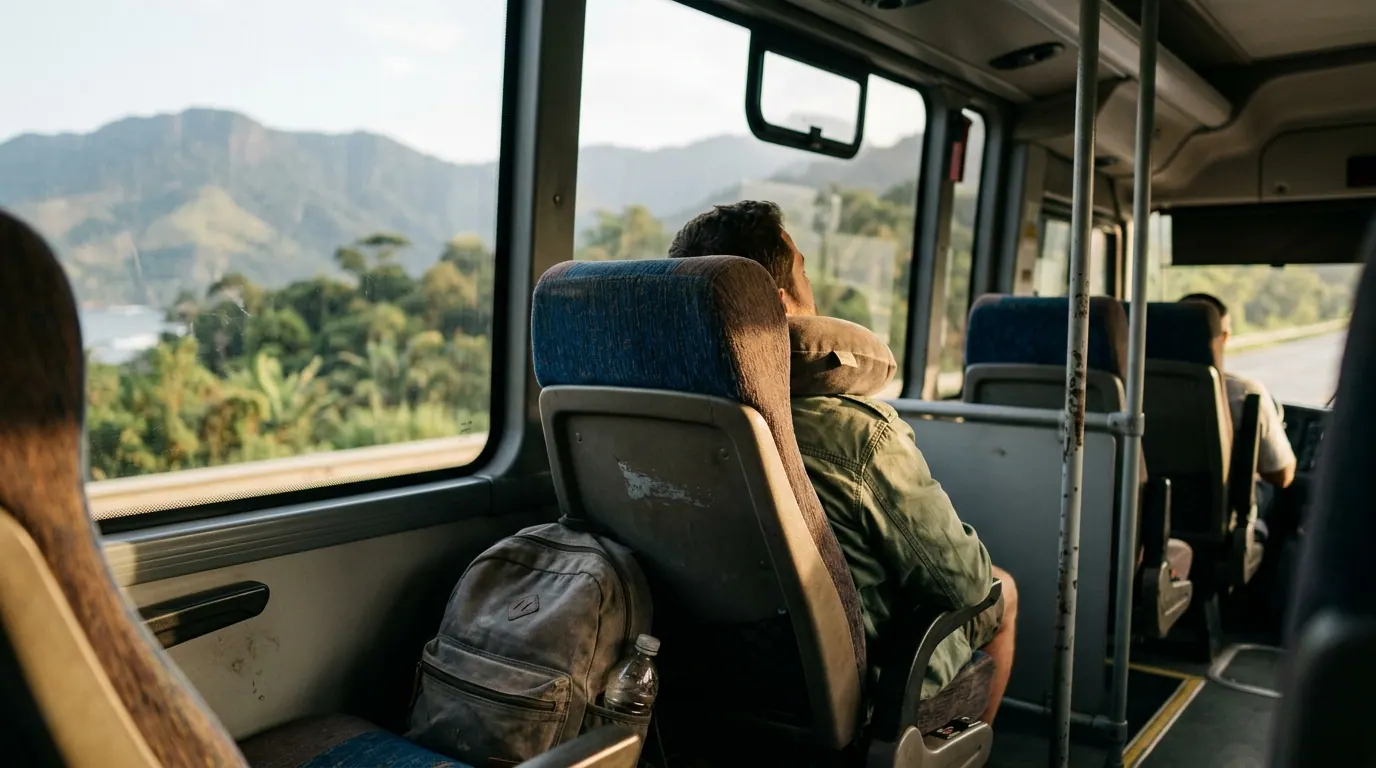
Generated (Gemini), via Wikimedia Commons
You can get from São Paulo to Rio de Janeiro without setting foot in an airport, and for most travelers the answer is a long-distance bus. It takes longer than flying, obviously, but it is comfortable, reliable, and a lot less stressful than people expect. I did this route by bus rather than plane, mostly because I wanted to see the Serra do Mar and skip the airport shuffle on both ends, and it worked out fine.
Most likely cause
The reason people end up asking this question is usually one of two things: they are trying to cut cost, or they just don't like flying short domestic hops that involve two security lines and a taxi at both ends for a flight that's only an hour in the air. If that's you, the bus is the straightforward fix. Companies like Cometa and Util run frequent departures between the two cities on the Rodovia Presidente Dutra, with buses leaving roughly every half hour to hour during the day from São Paulo's Tietê bus terminal, arriving at Rio's Novo Rio terminal. The trip takes somewhere in the range of 5 to 7 hours depending on traffic, time of day, and how many stops the bus makes. You can confirm this is the right option for you by checking that your total point-to-point time, door to door including terminal transfers, isn't actually longer than the equivalent flight once you add up airport transit and security on both sides. For many people going city center to city center, it isn't much longer at all.
Less common causes
Not everyone is choosing the bus for the same reason, and the alternatives matter depending on what you actually want out of the trip.
- You want to drive yourself. Renting a car and doing the Dutra highway independently is possible and gives you flexibility to stop in Paraty or the Costa Verde towns along the way, but tolls, gas, and one-way rental drop fees add real cost, and driving into central Rio or São Paulo traffic is not something I'd recommend for a first-time visitor. Confirm this fits by checking whether you actually plan to stop somewhere en route. If you're driving straight through, the bus is usually cheaper and less tiring.
- You're hoping for a train. There is no passenger rail service between São Paulo and Rio. This surprises a lot of visitors coming from Europe or parts of Asia, but Brazil's intercity passenger rail network is very limited, and this corridor isn't part of it. If a website or forum post mentions a train, it's outdated or mistaken.
- You want door-to-door without the terminal experience. Private transfer services and shared vans exist and will pick you up from a hotel or apartment. These cost more than the standard bus fare, often several times as much, and are worth it mainly if you're traveling with a group splitting the cost, have a lot of luggage, or are arriving at odd hours when public terminal transport is thin. Confirm by pricing a private transfer against bus fare for your specific dates; the gap varies a lot.
How to fix it
Here's roughly how I'd plan the trip if you're doing the standard bus route:
- Pick your class. Standard "convencional" seats are fine for a daytime run. "Leito" or semi-leito seats recline further and are worth the upgrade for overnight departures, which do exist and let you skip a hotel night. The price difference between standard and leito is usually a modest percentage increase, not double, but check current fares directly with the operator rather than trusting an old blog number.
- Book ahead if you're traveling on a weekend or holiday. Friday afternoons and the days around major holidays sell out, especially routes leaving São Paulo in the evening. Midweek daytime departures are usually easy to book a day or two out.
- Get to the terminal early. Tietê in São Paulo and Novo Rio in Rio are both large, busy stations. Give yourself 30 to 45 minutes before departure to find your platform, especially the first time.
- Bring ID. Brazilian bus companies typically ask to see identification matching your ticket name before boarding. A passport works for foreign travelers.
- Watch the route through the mountains. The Dutra crosses the Serra do Mar and Serra da Mantiqueira, and depending on which side of the bus you're on and the time of day, you get real views. This is the part of the trip that made the extra hours worth it for me, not something a flight ever gives you.
- Plan your arrival. Novo Rio terminal is in a part of the city that's fine during the day but you should take a registered taxi or app-based ride rather than walking with luggage at night. Same caution applies at Tietê.
When it is not worth fixing
Flying is still the better call in a few situations, and it's worth being honest about that instead of pretending overland always wins. If you're on a tight schedule and need to be in Rio in a few hours, not most of a day, fly. The flight itself is around an hour, and even with airport time added on both ends it will usually still beat the bus on raw speed. If you're traveling with small children or have mobility issues that make a 6-hour seated trip genuinely hard, the shorter flight is kinder on everyone. And if you catch a genuinely cheap promotional airfare, sometimes pricing close to or even below the cost of a leito bus ticket, there's no strong economic argument left for taking the bus, only the scenery argument, which is real but personal.
The other case where it's not worth it: if you're trying to save a meaningful amount of money and you book a leito seat plus a hotel night near either terminal because your bus lands at an awkward hour, you can eat up most of what you saved versus a budget flight. Add up the full cost, ticket plus any transfers plus any extra night, before deciding this is the cheaper option, because it isn't automatically.
For me the trade was simple: a few extra hours for mountain views, lower cost most of the time, and no airport lines, in exchange for giving up speed. If that trade appeals to you too, the bus between São Paulo and Rio is a solid, well-worn route and not some obscure workaround. This is the kind of first-hand overland detail I like covering here at Window Seat World, because the guidebook answer often skips the parts that actually matter when you're standing at the terminal with a backpack, trying to figure out which platform is yours.
New trip reports as they land
First-person routes, costs and photos from trips actually taken. Join the list.
Join the list