The Feijoada Worth Skipping Lunch For in São Paulo
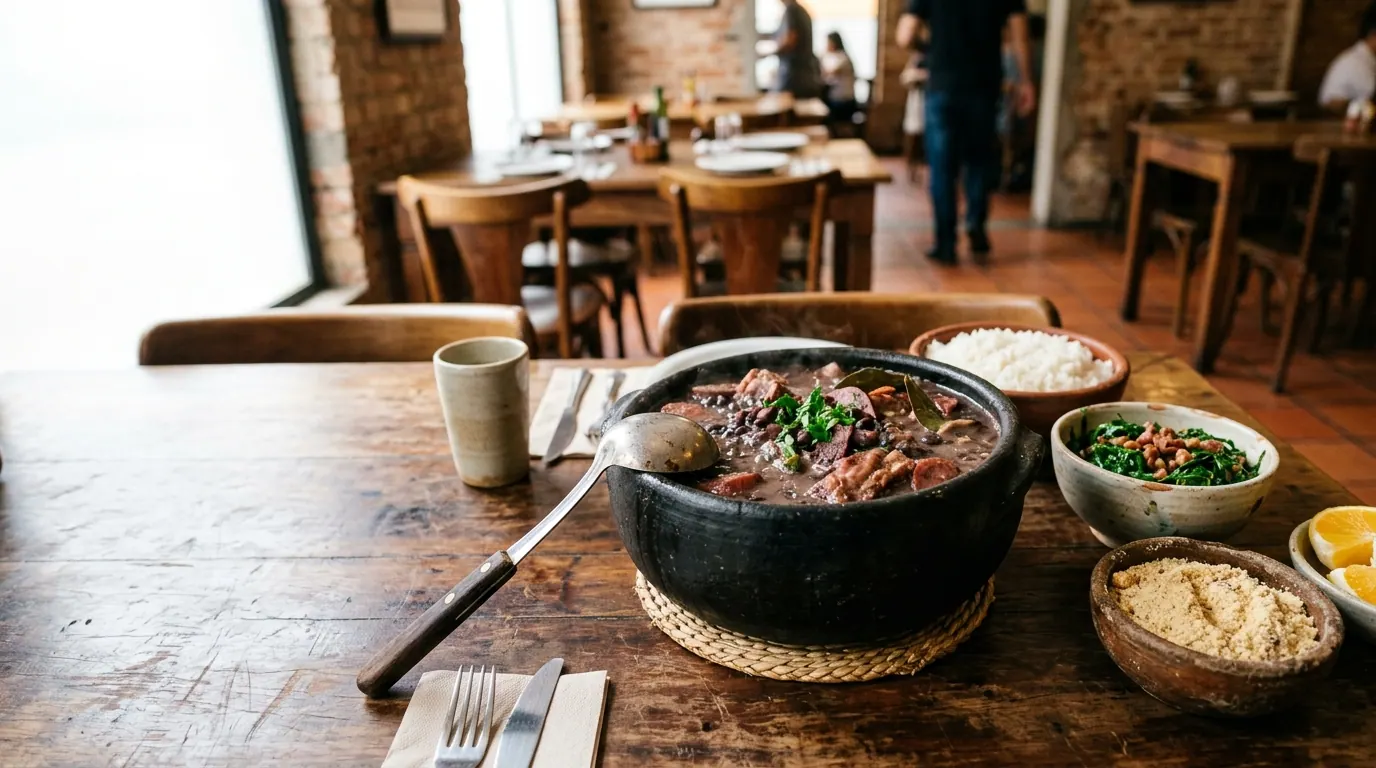
Generated (Gemini), via Wikimedia Commons
If you only eat one feijoada in São Paulo, make it the one at Bar do Bolinha in Jardins. Most traditional feijoada houses in the city only run the full version on Wednesdays and Saturdays, which is the old custom, since the dish takes all day to cook properly and cooks used to make it once the week's cheaper cuts of pork had piled up. Bolinha serves it daily, and the quality doesn't drop off on the days you'd expect it to be an afterthought. That matters if you're only in town for a short stretch and can't plan your trip around a specific weekday.
This is not a five-minute lunch. Feijoada is a black bean stew loaded with pork, sausage, and sometimes beef, served with rice, collard greens, orange slices, and farofa on the side. It's heavy, it's rich, and it's meant to be eaten slowly with no plans for the rest of the day. Skipping a regular lunch to make room for it isn't a figure of speech. It's practical advice.
The checklist
- [ ] Go at lunch, not dinner Feijoada in São Paulo is traditionally a midday meal. Some places don't even offer it in the evening, and the ones that do treat it as an afterthought.
- [ ] Arrive before the main midday rush Popular feijoada spots fill up fast between roughly noon and 1:30pm. Getting there earlier, or reserving ahead if the place takes reservations, saves you standing around waiting while everyone around you is already eating.
- [ ] Order it for the table, not per person Many places serve feijoada as a shared pot meant for two or more. Ordering one per diner usually means way too much food and a lot of waste.
- [ ] Ask about the accompaniments The couve (sautéed collard greens), farofa (toasted cassava flour), and orange are not garnish, they're there to cut the richness of the beans and pork. Skipping them makes the meal heavier and, honestly, less balanced.
- [ ] Budget more than you think Expect somewhere in the range of R$80 to R$150 per person at a proper sit-down feijoada house, though this varies by neighborhood and whether you add caipirinhas. Treat any number you hear as a rough range, not a quote.
- [ ] Clear your afternoon This is a two-to-three hour meal if you do it right, and you won't want to do much of anything physical afterward. Don't schedule a museum visit right after.
The two that people skip
The first thing visitors skip is pacing themselves on the beans versus the meat. The pot usually comes with several cuts, pork ribs, sausage, sometimes ear or foot for texture and body. First-timers pile their plate high with everything at once, get full fast, and miss the point, which is to work through it slowly over multiple smaller servings, mixing in rice and farofa as you go. Do it that way and you get more out of the meal and don't feel wrecked by the halfway point.
The second is the digestivo after. A small glass of cachaça, or at minimum a strong coffee, is the traditional way to close out a feijoada, and it genuinely helps settle a meal this heavy. Tourists finish eating, pay, and rush off to the next stop on the itinerary. Locals sit for another twenty or thirty minutes. That extra bit of stillness is part of why the meal doesn't sit like a brick for the rest of the day. Build the time in rather than treating the last bite as the end of the experience.
None of this requires insider knowledge or a fixer. It just requires knowing that feijoada is a commitment, not a quick stop between sights, and that the version worth rearranging your day for is the one where the kitchen treats it as a daily craft rather than a once-a-week special. That's the whole case for Bolinha, and it's the kind of specific, tested recommendation Window Seat World tries to stick to instead of another generic list of ten places to eat in São Paulo.
New trip reports as they land
First-person routes, costs and photos from trips actually taken. Join the list.
Join the list