The Barbecue Joint in Austin Worth Driving Two Hours For
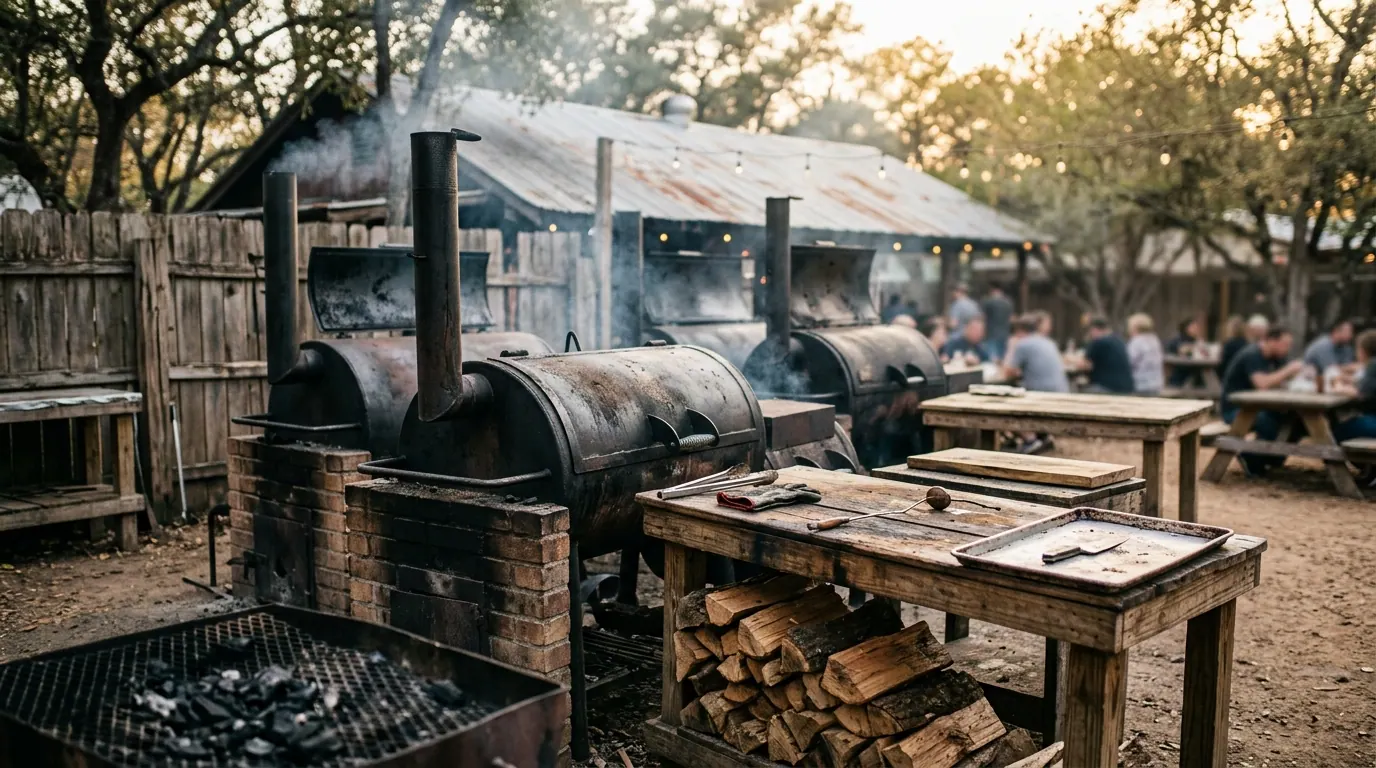
Generated (Gemini), via Wikimedia Commons
If someone asks me which barbecue in the Austin area is actually worth rearranging a Saturday for, I don't send them downtown. I send them an hour northeast, out past the highway loops and into farm country, to a small joint in Lexington, Texas called Snow's BBQ. It's open one day a week. It sells out most weeks. And it's the only place in the region where I've seen people set an alarm for the middle of the night on purpose, for barbecue, and not regret it.
What the problem actually looks like
Search "best barbecue Austin" and you get the same six names in every list, ranked and re-ranked, mostly clustered inside the city where rent is high and lines are long by ten in the morning regardless of what's actually coming off the pit. Some of those places are genuinely good. A lot of them are just convenient, which is a different thing. The actual problem for a traveler is that convenience and quality get confused, and you end up standing in a downtown line for ninety minutes to eat something that's fine, when something better is forty-five minutes further out and nobody bothered to mention it because it doesn't fit neatly into a top-ten format.
Snow's doesn't fit that format. It's open Saturdays only, starting early morning, and it's done for the day whenever the meat runs out, which some weeks is mid-morning. That single fact filters out anyone who isn't actually planning a trip, which is exactly why it's worth including here and not in a generic list.
Why it happens
The short version is that great small-town Texas barbecue was never built to scale. The pit at Snow's has been run for decades by Tootsie Tomanetz, who was still working the fire in her eighties and became something of a legend in Texas food writing after Texas Monthly named the place the best barbecue in the state in 2008. That kind of recognition usually kills a small operation, either by forcing it to expand or by turning it into a tourist stop that coasts on reputation. Snow's mostly didn't do either. It stayed a once-a-week operation in a small building next to an old baseball field, cooking whole hog and brisket overnight over post oak the same way it always has.
That's the mechanism behind almost every genuinely great small barbecue joint in Texas. Whole hog and long-cooked brisket over real wood are slow, physical, unglamorous work, and doing it well doesn't scale up without changing what it is. The places that stay excellent tend to be the ones that stayed small, kept the same pitmaster, and never tried to open a second location. That also means limited hours, limited output, and a real chance of driving out and finding a sold-out sign. That's not a bug in the experience. It's the actual reason the food is good.
What we do about it
Treat it like an appointment, not a stop on a road trip. Here's the actual plan:
- Go on a Saturday. That's the only day it's open, and there's no way around that.
- Leave Austin with enough buffer to arrive well before opening. People start lining up while it's still dark out, and the line moves fast once the doors open, but the meat is finite and it can genuinely be gone by late morning on a busy week.
- Bring cash as a backup. Small-town Texas barbecue joints vary on card acceptance, and it's a bad place to find out the hard way.
- Order brisket and whatever the daily special is, and don't skip the sides just because the meat is the headline. They're cooked with the same care.
- Eat there if the weather allows it. There's outdoor seating, and part of the experience is sitting in a small Texas town on a Saturday morning with a plate of food that took all night to make.
The honest cost of doing this right is mostly time, not money. Figure on roughly an hour of driving each way from Austin, plus however long the line runs, plus the drive back. Meat is typically priced by the pound, and like most Texas barbecue in the past few years that price has climbed with beef costs generally, so expect a range rather than a fixed number and don't be surprised if it's higher than what you remember from a few years back.
What it costs to ignore
If you skip the planning and just show up whenever, the most likely outcome is a for sale sign of a different kind: sold out, closed for the day, drive home hungry. That's the real cost of ignoring the schedule here, not a food safety issue or a slow decline in quality, just a wasted trip. The second most common mistake is treating it as a quick stop on the way to somewhere else and rushing the visit, which mostly just means you don't get a table, you eat standing at your car, and you leave without really having the experience that made the drive worth it in the first place.
There's also a slower cost, which is settling for the convenient downtown option out of habit and never finding out there was something better forty-five minutes away. That's the whole reason a first-hand account is worth more than an aggregated list here at Window Seat World. A list tells you what's popular. A trip report tells you what's actually worth the drive.
FAQ
Is it really two hours from Austin?
One way it's closer to an hour. Round trip, with the drive out and back, you're looking at close to two hours in the car, which is where the title comes from. If you're coming from San Antonio or Houston instead, the one-way drive alone can get closer to two hours.
What if it's sold out when I get there?
Have a backup plan for lunch in the area, and treat the trip as scouting for next time. This is genuinely part of the deal with small-batch barbecue, and it's worth knowing going in rather than being surprised by it.
Is it worth it if I'm only in Austin for a couple of days?
If your trip includes a Saturday morning, yes. If it doesn't, you're better off picking one of the strong in-city options and saving this one for a trip where you have the flexibility to build a morning around it.
New trip reports as they land
First-person routes, costs and photos from trips actually taken. Join the list.
Join the list