The Photo I Almost Didn't Get in Salvador (and How I Got It)
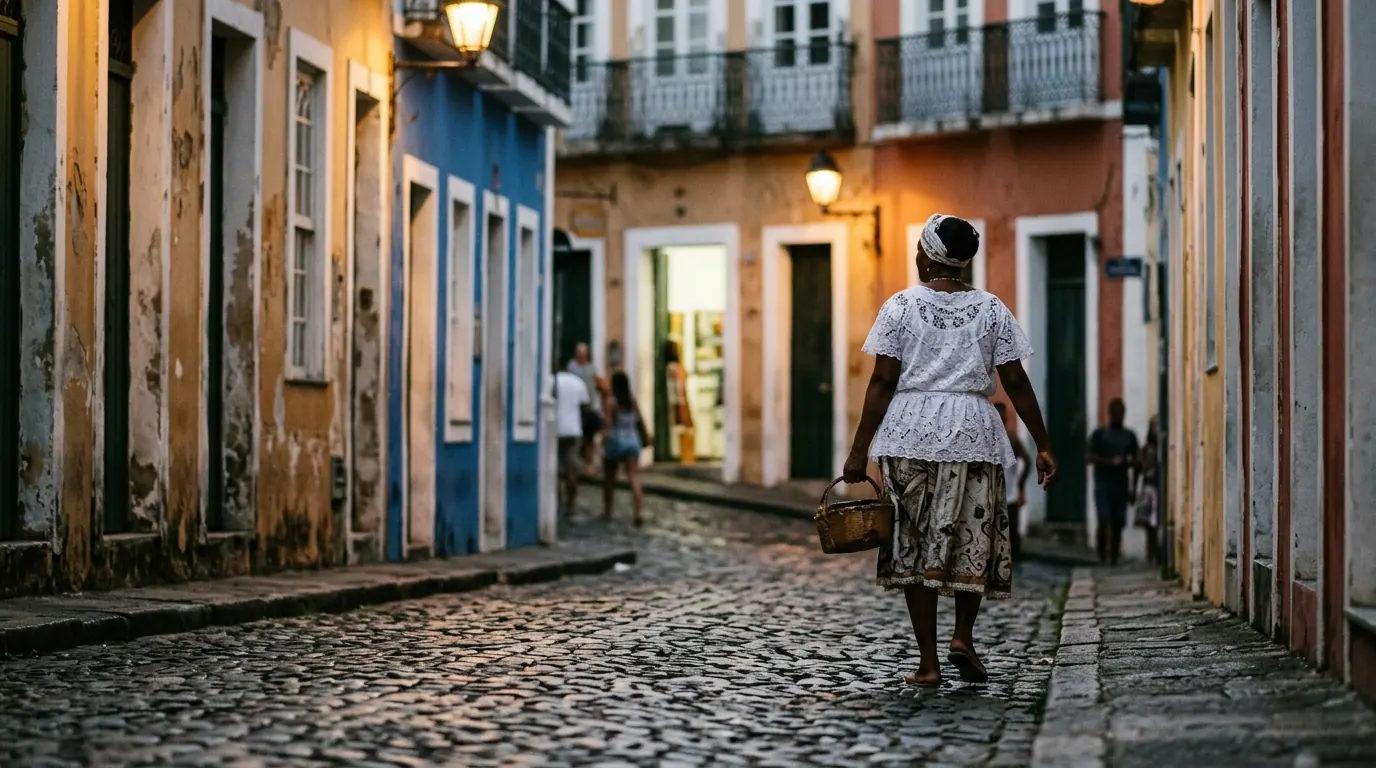
Generated (Gemini), via Wikimedia Commons
The best photo I took in Salvador almost didn't happen because I gave up on it once already, packed the camera into the bag, and walked away. I only got it because I went back the next evening and waited in a spot that looked wrong until it wasn't.
What the problem actually looks like
I was on the upper terrace near the Elevador Lacerda, trying for the classic view: the colonial rooftops of the Cidade Baixa below, the container cranes and ferries on the Baía de Todos os Santos behind them, all of it lit up orange as the sun dropped. On the first evening the sky did the opposite of what I wanted. A bank of grey cloud rolled in off the water about twenty minutes before sunset and flattened the whole scene. No shadow, no color separation between the water and the sky, just a soft grey wash over everything. At the same time a tour group set up along the railing where I'd planned to stand, and a guard started waving people back from the edge because the terrace closes not long after dark.
I checked the back of my camera, saw a flat, muddy frame, and left. That's the honest part of this story. I didn't push through it that day. I just went back to the hostel annoyed.
Why it happens
Salvador sits right on the coast, and the air coming off the Atlantic is loaded with moisture most of the year. That moisture builds into cloud through the afternoon and can either burn off before sunset or roll in and sit there, and there's no way to know which from the ground at 3pm. Locals told me the rainy months, roughly April through July, are the least predictable, but showers and cloud can show up outside that window too. It's a range, not a rule.
The second part of the problem is just crowding. Everyone who's done any research knows sunset from that terrace is the shot to get, so the same twenty-minute window that might give you good light is also the twenty minutes when the most people are standing at the railing. You're fighting weather and foot traffic on the same clock.
The third part is the closing time. The upper terrace and elevator area don't stay open all night, and staff start moving people along not long after the sun is down, sometimes while there's still decent color in the sky. If you're not already in position when the light turns, you can lose the shot to a guard's whistle as easily as to a cloud.
What we do about it
What actually worked was going back a second time and changing the plan instead of hoping for better luck. Here's roughly what that looked like:
- I scouted the terrace at midday, when it's usually dead, and figured out exactly which section of railing gives the clean sightline over the rooftops to the water, without a lamppost or a tour sign in the frame.
- I checked the closing time with a guard directly, since posted hours and actual practice aren't always the same thing.
- I showed up about 40 minutes before sunset the second evening, well before the crowd, and held that spot even while the sky still looked unpromising.
- I kept an umbrella folded in the bag, not for me, for the lens, in case a shower started while I was waiting.
- I didn't bracket exposures wildly. I just waited for one clean break in the cloud, metered for the sky and let the foreground go a bit dark, and took maybe fifteen frames in the ninety seconds the light was actually good.
The cost of this wasn't money, it was time. Going back meant reshuffling the next day's plan and a short taxi ride back to the old town in the evening instead of eating dinner where I already was. That's the real trade-off on a trip like this: not gear, not skill, just being willing to spend another evening on one photograph instead of moving on to the next thing on the list.
What it costs to ignore
If I'd kept the first evening's photo and called it done, I'd have a technically fine picture of Salvador that looks like a hundred other flat, overcast travel shots. Nothing wrong with it exactly, just nothing in it either. No warmth in the stone, no separation between the water and the sky, none of the color that makes that particular view worth climbing up for in the first place.
The bigger cost is more personal. That view is one of maybe two or three images that actually represent what it felt like to stand in that city at that time of day. Settling for the flat version means the trip photo folder has a gap where the memory should be, and you don't usually notice the gap until you're home flipping through them months later looking for the one that captures the place, and it isn't there.
FAQ
When's the best time of year to try for this kind of light in Salvador?
Roughly September through February tends to be drier and more reliable, but that's a general range, not a guarantee. Rain and sudden cloud can show up in any month, so plan for a backup evening if the shot matters to you.
Do you need a tripod or special gear for this?
No. A phone or a basic camera handles it fine in decent light. What matters more is timing and position: being on the railing early, knowing where the guards start clearing people, and having something to protect the lens if a shower rolls through while you wait. I wrote this one up for Window Seat World mainly because the technique mattered more than the equipment did.
New trip reports as they land
First-person routes, costs and photos from trips actually taken. Join the list.
Join the list