Two Weeks Island-Hopping Bahia's Coast: The Route I'd Take Again
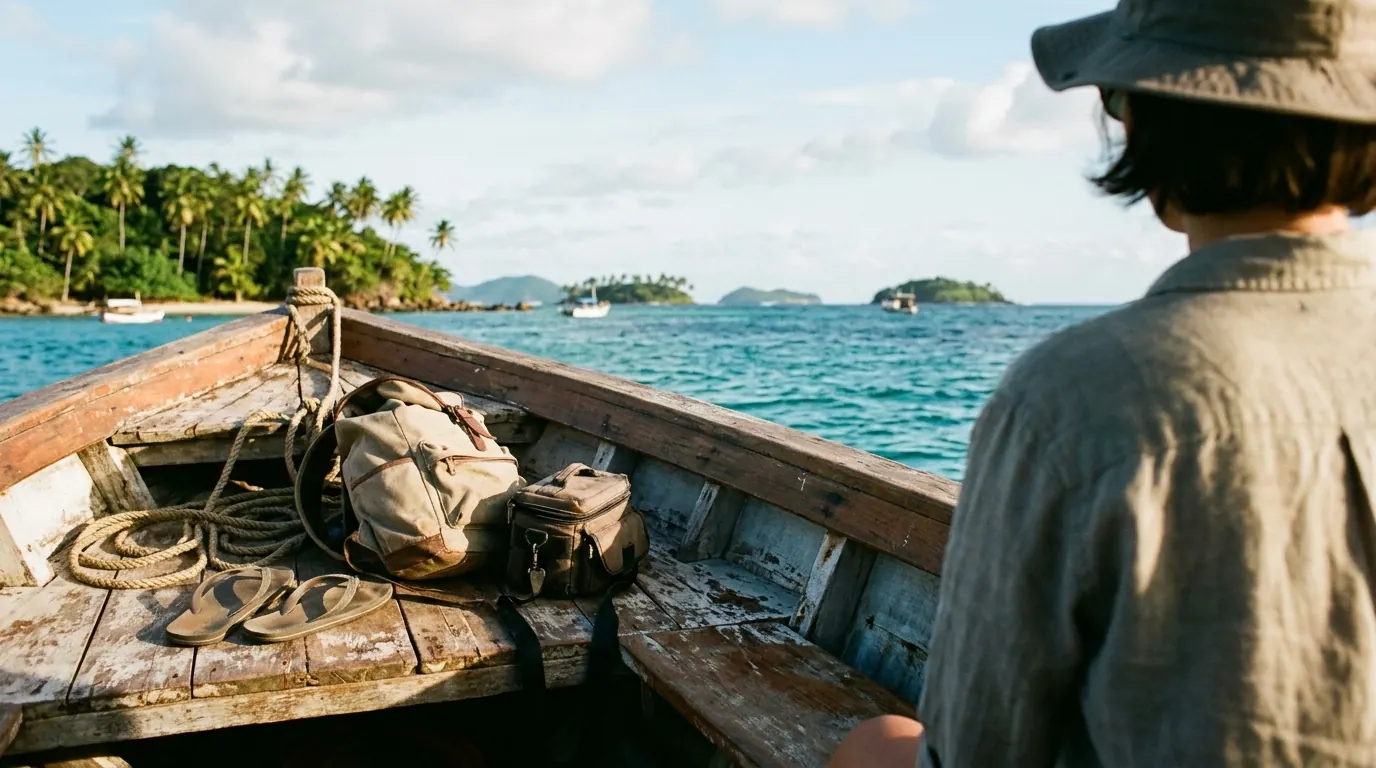
Generated (Gemini), via Wikimedia Commons
If you want the short version: fly into Salvador, boat to Morro de São Paulo, boat again to Boipeba, then work your way down the coast by van and boat to Itacaré, and fly out of Ilhéus instead of backtracking to Salvador. That loop took me fourteen days, moved slowly enough to actually rest, and never once put me on a bus longer than four hours. Here's how it broke down, day by day, and what I'd keep or change.
Days 1-3: Salvador first, not last
I landed in Salvador and stayed in Pelourinho for three nights. Some people save the city for the end of the trip, treating it as a decompression stop before the flight home. I'd argue against that. Pelourinho is loud, hilly, and full of history you actually want energy for, not jet-lag leftovers. Go early while your legs and patience are fresh.
Three nights was right. Two would have felt rushed, since the old town alone takes a full day, and you want at least one evening for a show at a casa de capoeira or live percussion in one of the praças. I used the third day as a buffer for the ferry terminal, because boat schedules to the islands shift with tides and weather, and you don't want to be sprinting for a 2pm departure with a backpack.
Days 4-6: Morro de São Paulo, the easy island
The ferry from Salvador to Morro de São Paulo runs a couple of times a day and takes roughly two to three hours depending on the boat and the sea. Book it the day before if you can, since seats do sell out in high season (December through February, and around Carnival).
Morro is set up for a first island stop. No cars, sand streets, a line of beaches numbered one through five that get progressively quieter as you walk further from the village. I stayed three nights, which was enough to settle into a rhythm: breakfast late, beach until the light went flat around 2pm, then a walk up to the fort ruins for sunset. Beach four had the best snorkeling on a calm day, though visibility depends entirely on recent weather.
If I'm honest, Morro is the most touristed stop on this route and it shows in the prices and the crowds near the main dock. That's fine for an adjustment period. Just don't make it the whole trip.
Days 7-9: Boipeba, the quiet one
From Morro, a smaller boat runs to Boipeba most mornings, roughly 45 minutes to an hour depending on tide. This is the stretch I'd tell anyone not to skip. Boipeba has no real village center to speak of, a scatter of pousadas, and beaches that stay empty even at midday. Velha Boipeba, the old fishing settlement a short walk or boat ride away, is where I had the best meal of the whole trip, a simple moqueca at a place with four tables and no sign.
Three nights here felt exactly right. Any longer and you'd run out of things to do, which is sort of the point. Bring cash. ATMs are unreliable on Boipeba and card machines even more so.
Days 10-11: the overland gap
This is the part nobody writes about, because it's not glamorous, but it's where the route either works or falls apart. Getting from Boipeba down toward Itacaré means a small boat back to the mainland near Valença, then a van or bus south. There's no direct island-to-island boat covering this whole stretch, and anyone who tells you there is hasn't actually tried to book one in the last couple of years.
I budgeted a full travel day for this and was glad I did. Boat to Valença, short wait, then a combi van heading south along the coast road. Total door-to-door time ran close to five or six hours including the wait, which is longer than the map distance suggests. I used the extra half day as slack in case of delays, and didn't need all of it, but I'd rather have spare time at a beach than miss a connection.
Days 12-13: Itacaré
Itacaré is a real town, not just a tourist strip, with a working fishing harbor and streets that go back from the water instead of just along it. It's also the surf stop on this route. Even if you don't surf, the beaches north of town (Tiririca, Engenhoca) are reachable by a short moto-taxi and worth the trip for the swimming alone.
Two nights was tight here. If I did it again I'd take a third, mostly for the Serra Grande day trip inland through cacao country, which I had to skip for time. That's the one real regret in this itinerary.
Day 14: flying out of Ilhéus
Ilhéus has its own small airport about 70km south of Itacaré, with a straightforward transfer by shared van or taxi, roughly an hour and a half depending on traffic through town. Flying out from there instead of backtracking to Salvador saved a full day and a long bus ride. Connections from Ilhéus usually route through São Paulo or back through Salvador anyway, so check your options before assuming you need to return north.
What I'd change next time
- One more night in Itacaré, taken from Morro de São Paulo, which doesn't need four nights for most travelers.
- Book inter-island boats a day ahead in high season. I got lucky twice and wouldn't count on luck a third time.
- Carry more cash than feels necessary. Card acceptance drops fast once you're off Morro de São Paulo.
- Pack for humidity, not heat. A thin rain layer earns its space in the bag during the wetter months around April through July.
Is this route for everyone
It suits people who want beach time with a bit of friction in between, not a fully smoothed package tour. If you want every transfer pre-booked and air-conditioned, this isn't that trip. The boats are small, the schedules are approximate, and the overland day between Boipeba and Itacaré is genuinely unglamorous. But the payoff is a string of islands that still feel like islands, not resort shells, and a route that doesn't backtrack on itself.
I wrote this up for Window Seat World mostly because I couldn't find a day-by-day account when I was planning it myself, just lists ranking islands against each other with no sense of how to actually link them together. This is the link.
New trip reports as they land
First-person routes, costs and photos from trips actually taken. Join the list.
Join the list