One Week in the Pantanal: What I Saw and What I Missed
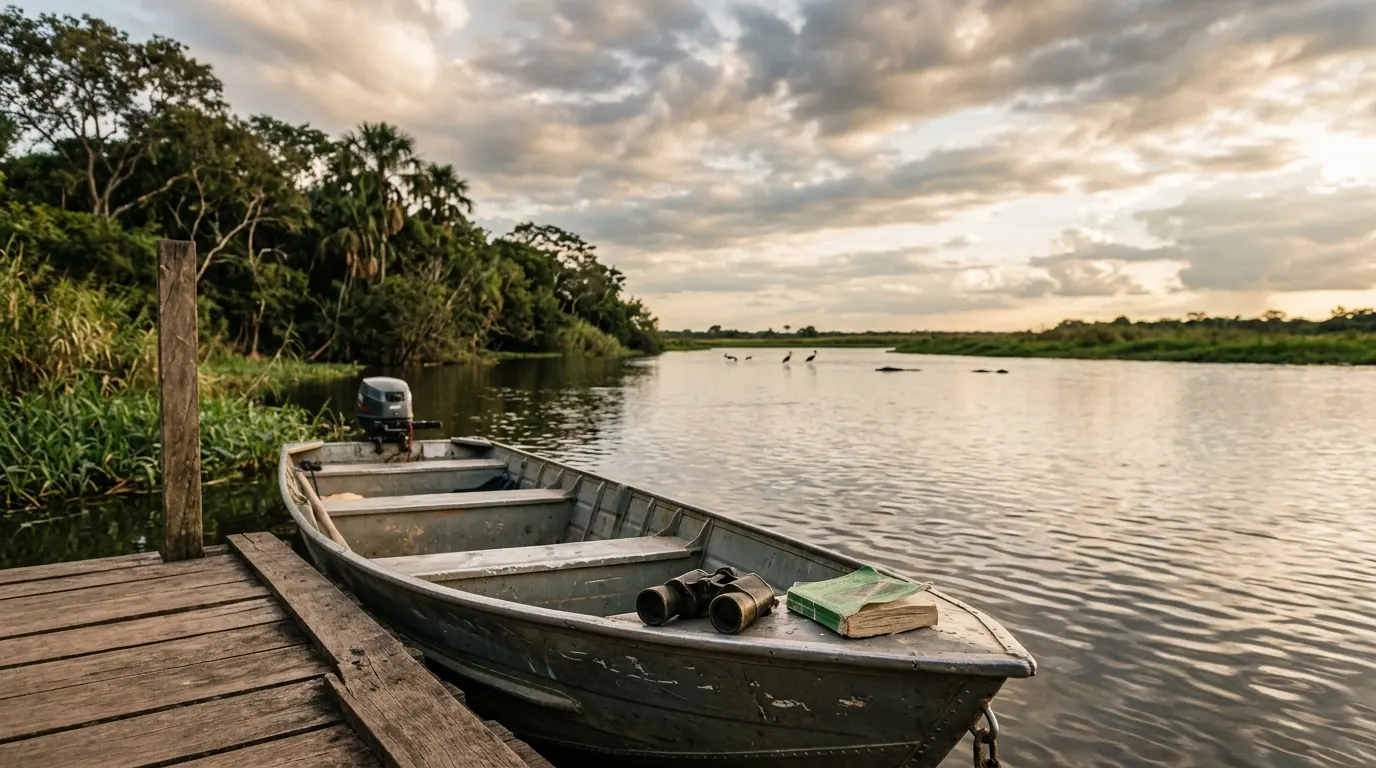
Generated (Gemini), via Wikimedia Commons
One week in the Pantanal is enough to see a lot of animals and still miss the one everyone goes for. This is for independent travelers who want a straight account before they book: what a week actually covers, what it costs in rough terms, and where the gap is between the brochure photo and the real thing.
What you need
- 7-8 days minimum. Anything shorter and you spend too much of the trip driving in and out on the Transpantaneira.
- A base in both the northern Pantanal (around Porto Jofre, reached from Cuiabá) and, if you can, the southern Pantanal (around Miranda or Bonito, reached from Campo Grande). Doing only one side is fine, but it changes what you'll see.
- Binoculars, 8x42 or 10x42. Don't bring anything smaller. Birds and caiman eyes at dusk need the light-gathering.
- A dry bag or two. Boat trips on the rivers throw spray, and afternoon storms in the wet season arrive fast.
- Neutral-colored clothing, long sleeves, and real insect repellent with DEET. Mosquitoes and biting flies are constant near water.
- A lodge or pousada that runs its own boats and 4x4s, not a hotel that just books tours. This matters more than almost anything else on this list.
- Budget in the range of USD 200-450 per person per day for lodge-based full-board stays with activities included, more if you add specialized jaguar boat trips out of Porto Jofre in the dry season (roughly July through September, when jaguar sightings are most reliable).
Step by step
- Fly into Cuiabá, not straight to a lodge. Cuiabá is the gateway to the northern Pantanal. Spend the first night there if your onward transfer is a long drive, because the Transpantaneira road takes four to six hours in good conditions and can take longer after rain, even though the total distance is only around 150 km.
- Spend three to four nights in the north, near Porto Jofre. This stretch of river is the best-known jaguar area in the world. Mornings and late afternoons are spent on boats along the Cuiabá and Piquiri rivers. You'll see caiman constantly, capybara in groups, and a steady stream of birds: jabiru storks, hyacinth macaws, kingfishers, herons. Jaguar sightings here are common in the dry season but not guaranteed on any single trip, no matter what an operator's photo gallery suggests.
- Move south, either by road or by flying back through Campo Grande. The southern Pantanal has less river access and more open grassland and forest edge. This is where you're more likely to see giant anteater, tapir, and larger groups of marsh deer, plus a different bird mix. It's quieter and cheaper, and fewer people go.
- Build in at least one full unstructured day. A day with no scheduled activity, just walking a lodge's trails at dawn or sitting near a waterhole, is often when the less showy sightings happen: an ocelot crossing a track, a tayra in the trees, armadillos at dusk. Packed itineraries tend to move you past exactly the kind of quiet moment that produces a real sighting.
Where this goes wrong
The biggest gap between expectation and reality is the jaguar. People book the Pantanal specifically for jaguar, and in the north, in the dry season, on a boat with a good guide, the odds are genuinely good, often quoted by lodges as somewhere in the range of 80-90% chance of at least one sighting over a multi-day stay. That's a real number worth taking seriously, but it's also an average, and it means a meaningful share of visitors leave without one. If a jaguar sighting is the entire point of your trip, you need more days on the water in the north, not more days overall spread thin across regions.
The second common problem is timing against the season. The wet season, roughly November through March, floods much of the Pantanal, which is great for birds and for the sheer volume of water-dependent wildlife, but it makes roads difficult and some lodges close or cut back access. The dry season, roughly June through October, is when the Transpantaneira is passable and jaguar viewing peaks, but it's also when everyone else is trying to book the same handful of Porto Jofre lodges, so prices rise and availability tightens months in advance.
Third, people underestimate the driving. The Transpantaneira looks short on a map. It's an unpaved road with over a hundred wooden bridges, many of them narrow and in variable repair, and it's slow going by design, since a lot of the wildlife viewing happens from the vehicle itself. Treating it as a quick transfer rather than part of the trip leads to frustration.
Fourth, and this is the one I felt directly: a week is not long enough to cover both the north and south properly and also have slow, unstructured time in each. Something gets compressed. On a one-week trip, I'd rather spend five or six solid days in one region done well than split the week and spend two of those days on transfers and half-days of settling in.
When to stop and call someone
Don't try to self-drive the Transpantaneira in a rental car unless you're experienced with rough unpaved roads and comfortable changing a tire or dealing with a stuck vehicle with no cell signal for stretches. Most visitors are better off with a lodge transfer or a driver who does the route regularly and knows which bridges are currently in bad shape.
Don't book jaguar-focused boat trips through a generic tour aggregator without checking that the operator is actually based in Porto Jofre and runs those specific river routes daily. This is a narrow specialty and the difference between an experienced local guide and a general wildlife tour company shows up immediately in how fast they can find and read an animal's movement.
If you have real mobility limitations, ask lodges directly about boat entry and exit, since docks and boats vary a lot in how accessible they are, and this isn't something a general booking site will tell you accurately.
And if you're only willing to do this trip once, spend the money on a specialist Pantanal or Brazil wildlife operator to build the itinerary rather than piecing it together yourself from lodge websites. The lodges are honest about what they offer, but nobody except an operator who works both regions will tell you plainly that you can't do it all properly in a week and help you choose which half to do well.
I went in expecting jaguars and left with a much longer list of things I hadn't planned to care about, giant otters working a riverbank as a family, a tapir at last light, more macaws in one afternoon than I'd seen in total before. That's the honest trade the Pantanal makes with a first-time visitor. For more accounts like this one, Window Seat World runs firsthand trip reports rather than aggregated lists, which is the only way I've found to actually calibrate a trip like this before booking it.
New trip reports as they land
First-person routes, costs and photos from trips actually taken. Join the list.
Join the list