Renting a Car in Brazil vs the US: What I Wish I Knew
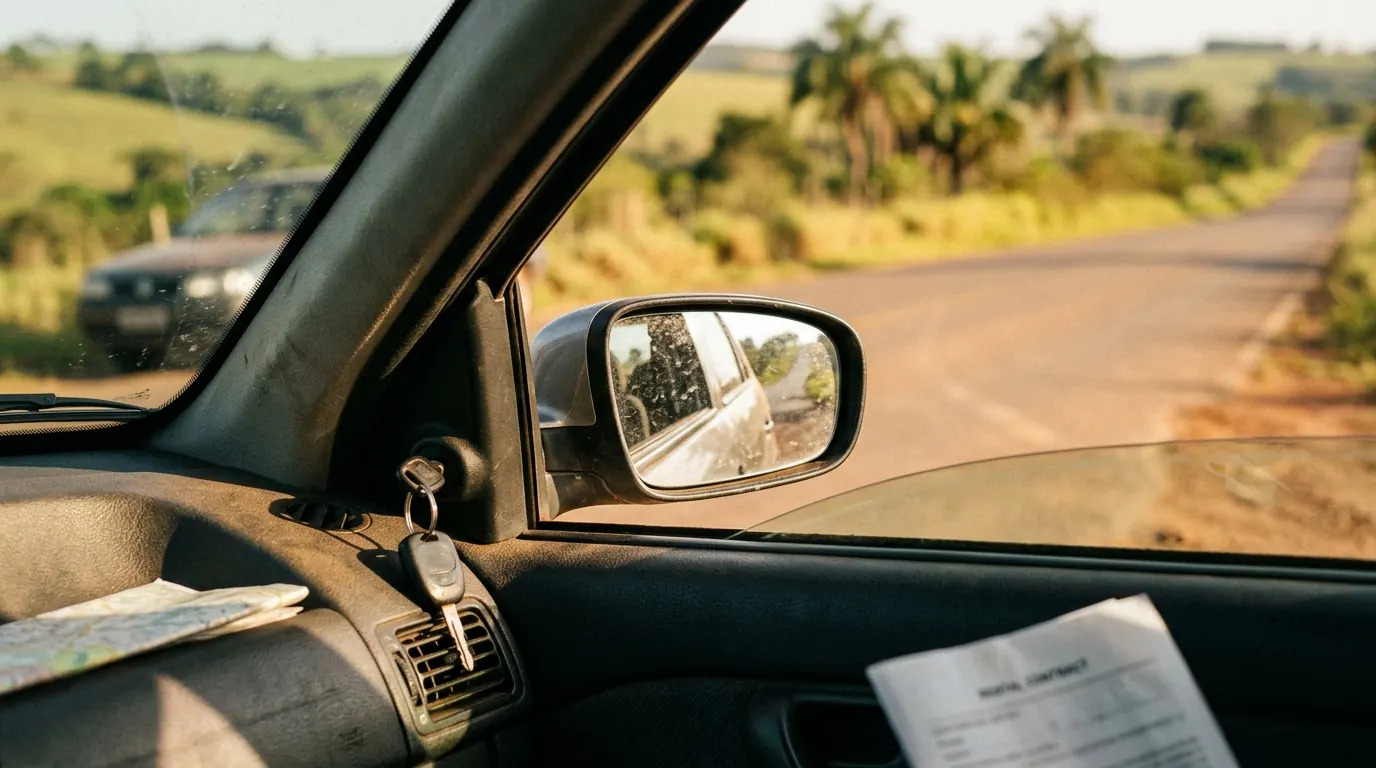
Generated (Gemini), via Wikimedia Commons
Run through this before you land, not at the rental counter. In Brazil, a handful of assumptions that hold true in the US quietly fall apart, and the counter agent is not going to walk you through them in English while a line forms behind you. Most of the trouble is avoidable if you check it from your couch a week ahead.
The checklist
- Automatic vs manual Most of the fleet in Brazil is manual transmission. Automatics exist but cost more and get booked out first, especially in smaller cities. If you can't drive stick, confirm the automatic is actually held for you, not just listed as available.
- Credit card, not debit Brazilian rental counters generally want a physical credit card in the renter's name for the security deposit. Debit cards are often refused outright, and a prepaid or virtual card usually won't work either.
- Minimum age and young driver fees Most agencies set 21 as the floor, with a surcharge for drivers under 25, similar to the US but sometimes steeper. Check the age bracket pricing before you book, not after.
- Fuel policy Full-to-full is common, same as the US, but gas stations in Brazil are attendant-operated. You don't pump your own gas, so budget a few extra minutes before returning the car.
- One-way rentals Dropping a car in a different city is far less standard than in the US and often carries a large one-way fee, if it's offered at all. Confirm this before you plan a route that starts in Rio and ends in São Paulo.
- Existing damage on the vehicle Walk-around inspections tend to be less rigorous than what US renters are used to. Photograph every panel, bumper, and wheel yourself before you drive off, timestamped, so you're not arguing about a scratch at return.
The two that people skip
The first is the deposit hold. US renters are used to a temporary hold of a few hundred dollars. In Brazil, holds can run noticeably higher, sometimes in the range of 3,000 to 6,000 reais depending on the car class and agency, and it can sit on your card for one to two weeks after return. If your card has a modest limit, this can eat your available credit for the rest of the trip. Call your card issuer before you go and make sure the limit can absorb it.
The second is tolls and city driving restrictions, and this one costs actual money if you ignore it. Many Brazilian highways use electronic toll tags, and rental cars are often equipped with a transponder that bills you automatically, sometimes at a markup over the cash rate, sometimes with a daily service fee whether you use a toll road or not. Ask exactly how the toll tag is billed and whether you can decline it if you're not leaving the city. On top of that, São Paulo runs a rodizio system that bans certain license plates from the center during weekday rush hours based on the last digit of the plate. Visitors don't get a pass just because they're renting. If your trip includes driving into central São Paulo on a weekday, ask the rental agency directly whether your assigned plate is restricted that day, because getting caught means a real fine and possible towing.
Beyond the checklist, a few smaller habits carry over well from any place you haven't driven before. Get a local SIM or eSIM before you need navigation, because relying on hotel wifi for turn-by-turn directions doesn't work once you're moving. In cities, park in guarded or gated lots overnight rather than on the street, which is standard local practice and not overcaution. And in some cities, drivers are advised not to come to a full stop at red lights late at night in certain areas for safety reasons. This isn't universal and isn't a Window Seat World invention, it's something local drivers and rental staff will mention if you ask, so ask.
None of this makes renting a car in Brazil harder than it sounds, it just runs on a different set of defaults than the US does. Confirm the transmission, the card, the deposit size, and the toll billing before you sign anything, and the rest of the trip is just driving.
New trip reports as they land
First-person routes, costs and photos from trips actually taken. Join the list.
Join the list