Why Ouro Preto Feels Like a Different Brazil Than Rio
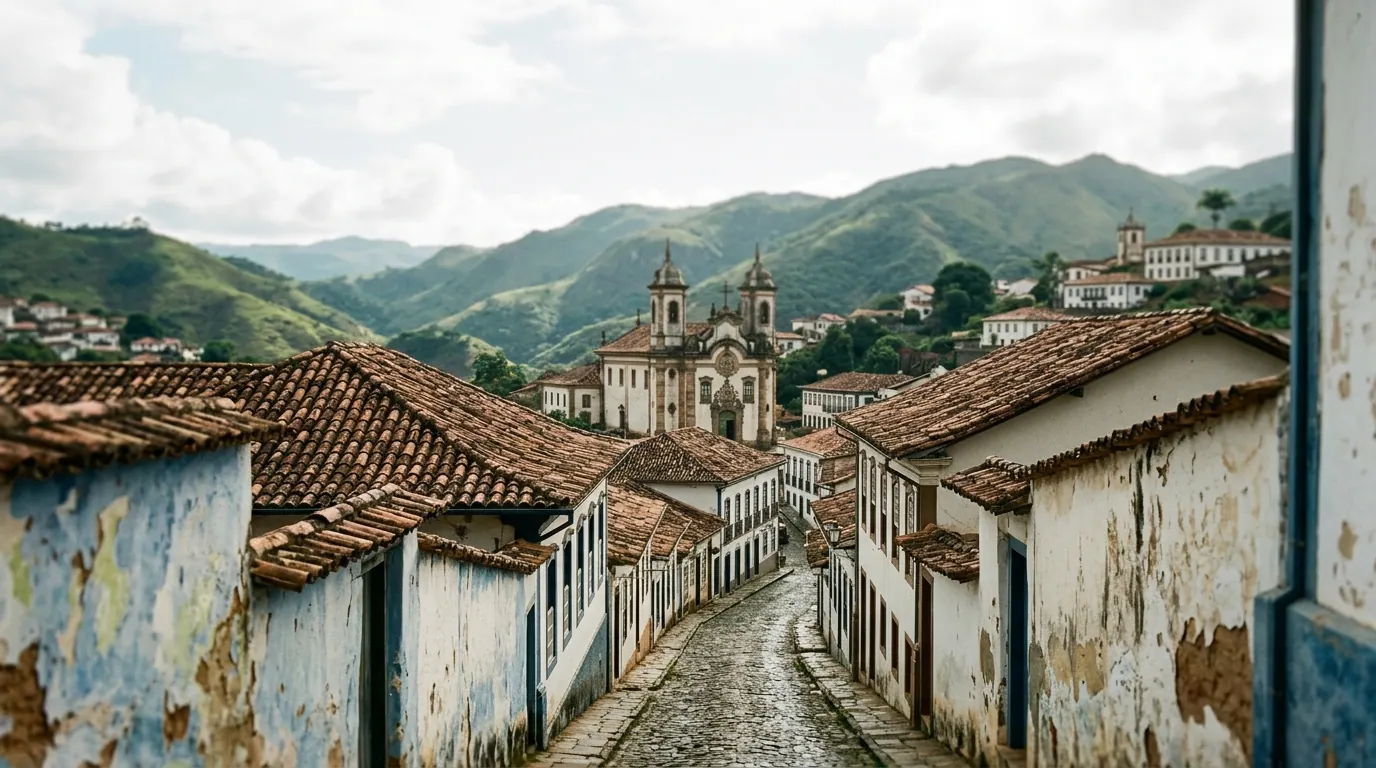
Generated (Gemini), via Wikimedia Commons
The mistake people make is treating Ouro Preto as a side trip from Rio, something you bolt onto a beach-and-Christ-the-Redeemer itinerary because a blog said it was pretty. It is pretty. But that framing gets the town wrong before you even arrive. Ouro Preto isn't Rio with hills instead of a coastline. It's a colonial mining town in the mountains of Minas Gerais, built on gold and Baroque churches, and it runs on a completely different rhythm than the coast. If you go in expecting a quieter Rio, you'll spend two days confused about why nothing feels familiar.
What follows is what actually changes once you cross from the Rio version of Brazil into the Minas Gerais version, and what to do about it before you book.
What the problem actually looks like
You land in Rio, adjust to its noise, its beach culture, its particular brand of friendliness that comes loud and fast. Then you take a bus five or six hours inland and climb into hills, and the town you arrive in has cobblestone streets so steep some of them have handrails bolted into the stone. There's no beach. There's barely any flat ground. The architecture is 18th-century Portuguese colonial, whitewashed buildings with dark wood trim, gold-covered church interiors, and a general quiet that Rio never has, even at 6am.
People eat dinner earlier. Shops close for actual lunch breaks. The food shifts from Rio's grilled meat and seafood culture to Minas comfort food built around pork, beans, cheese, and cachaça. Conversations slow down. Even the way people greet you on the street is different, less performative, more matter-of-fact. Travelers who arrive expecting Carnival energy find a town that goes quiet after dark except for a few bars near the main squares.
Why it happens
Rio was built as a port city, then a capital, then a beach city. Its whole identity comes from being outward-facing, connected to the ocean and to the rest of the world through trade and tourism. Ouro Preto was built inland, in the mountains, because that's where the gold was. It became the wealthiest town in Brazil during the 18th century gold rush, and its architecture, its churches, its whole layout reflects money that came out of the ground rather than off ships.
Minas Gerais as a state has always been a bit turned inward compared to the coast. The name literally means "General Mines." The Portuguese crown taxed the gold heavily and controlled the region tightly, which created a culture that historically kept its head down and its wealth private, expressed through churches and interiors rather than public display. That's a big part of why Ouro Preto's grandest buildings look plain from the street and stunning inside. Aleijadinho, the sculptor whose work fills the town's churches, worked in that same understated-outside, ornate-inside tradition.
The other piece is geography. Rio sits at sea level with a coastline that shapes everything about how people live. Ouro Preto sits at roughly 1,100 meters in the hills, with a climate that's cooler and drier than the coast for a lot of the year. That altitude and inland isolation kept the town somewhat frozen in time. There was no reason to modernize the historic center the way Rio modernized its waterfront, so a lot of what you see dates back two or three centuries with minimal alteration.
What we do about it
Treat Ouro Preto as its own destination, not an add-on. Give it two to three full days minimum, more if you want to use it as a base for nearby towns like Mariana or Tiradentes. The walking is genuinely hard on the legs. Streets pitch at angles that surprise people who assume "town" means flat sidewalks. Wear real shoes, not sandals, and expect to move slower than you would in Rio.
Getting there usually means a bus from Belo Horizonte, which itself is a flight or a long bus ride from Rio. Budget the better part of a day for the transfer if you're coming straight from the coast. Once you're in town, most of what matters is walkable, but the hills mean planning your day around elevation rather than distance on a map.
A few practical notes worth building into a trip:
- Church visits often have specific opening hours and sometimes a small entry fee, generally in the range of a few reais to around R$20, though this varies by church and by season, so check locally rather than trusting an old post.
- Evenings are quiet outside a handful of bars near Praça Tiradentes. If nightlife matters to you, that's a Rio thing, not an Ouro Preto thing.
- Food leans heavily on Minas cuisine: feijão tropeiro, pão de queijo, slow-cooked pork, and local cachaça. It's heavier and richer than coastal Brazilian food, and worth planning meals around rather than defaulting to whatever's closest.
- A simple pousada room in the historic center typically runs somewhere in the R$150 to R$400 a night range depending on season and how central it is, though this is a general range and should be checked against current listings.
What it costs to ignore
If you skip the mental adjustment and treat Ouro Preto like a quick detour, you end up rushing through what's actually one of the most architecturally significant towns in South America. People who give it half a day see a few churches and a viewpoint and leave thinking it was "nice." People who give it two or three days start noticing the details: how the gold leaf in the churches was paid for, how the town's layout reflects wealth and control, how different daily life feels an hour outside the state capital.
The bigger cost is comparative disappointment. If you arrive expecting Rio's energy and don't get it, you'll misjudge a genuinely remarkable place. Ouro Preto isn't trying to be Rio. It's trying to be a preserved 18th-century mining town, and it succeeds at that completely. Going in with the wrong expectations is the main way people end up unimpressed by a UNESCO World Heritage site.
This is the kind of place Window Seat World exists to write about: not the top-ten list version of Brazil, but the version you only understand once you've walked the hills yourself.
FAQ
Is Ouro Preto safe to walk around at night?
The historic center is generally fine for a walk after dinner, especially near the main squares where there's foot traffic. Like anywhere, stick to lit streets and avoid wandering into unfamiliar side streets alone late at night.
Can I do Ouro Preto as a day trip from Belo Horizonte?
You can, and some people do, but it undersells the place. A day trip gets you the main square and a couple of churches. Staying overnight lets you catch the town at dawn and after the tour buses leave, which is when it actually feels like itself.
New trip reports as they land
First-person routes, costs and photos from trips actually taken. Join the list.
Join the list