Mistakes I Made Packing for Brazil's Dry Season
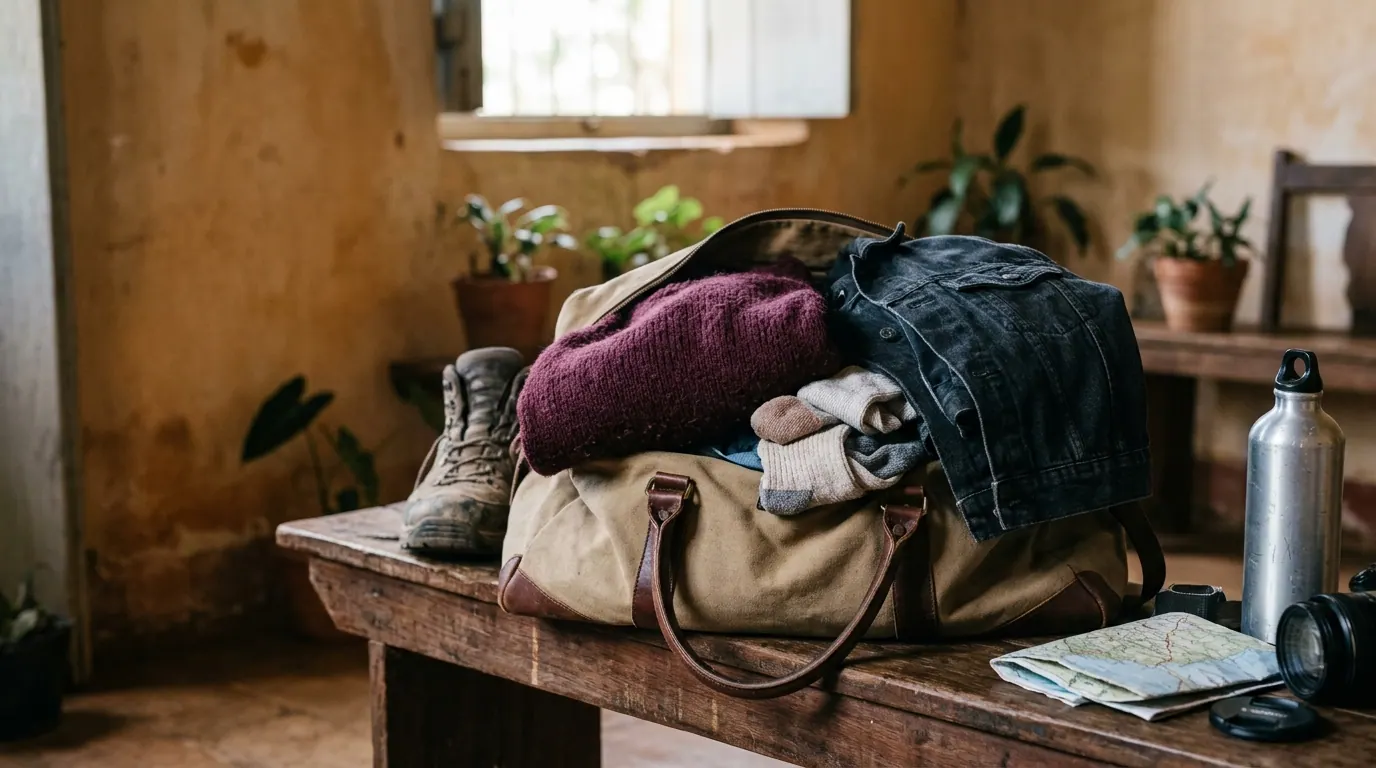
Generated (Gemini), via Wikimedia Commons
I packed for Brazil's dry season like it was one climate. It isn't. I brought heavy layers for the Pantanal and nearly froze at night in Chapada Diamantina, where I'd assumed 'dry and hot' meant the same thing everywhere. By day three in Bonito I was cycling through the same three shirts because everything else in my bag was wrong for the heat. By night in the highlands, at close to 1,000 meters, I was cold in fleece I'd only packed as a backup. The lesson took a whole trip to sink in: 'dry season' in Brazil covers at least three or four different packing lists, and they don't overlap as much as you'd think.
Most likely cause
The root problem is treating Brazil as one place with one dry season. It runs roughly May through September across the Amazon, the Pantanal, and the central Cerrado, but the Northeast has its own rhythm, often wetter when the rest of the country is dry, and the South is in the middle of its winter during those same months, with real cold at night. Elevation makes it worse. Chapada Diamantina sits high enough that daytime sun and nighttime chill can both be extreme in the same 24 hours. You confirm this isn't a myth by looking up the actual town you're flying into, not the country. A quick check of average lows for that specific place, not a general 'Brazil in July' search, will usually show a bigger day-night swing than you expect, often a 15 to 20 degree Celsius range in a single day in the interior.
Less common causes
A few other habits caused smaller versions of the same mistake.
- Assuming low humidity everywhere. Dry season in the Amazon means less rain, not dry air. It's still humid there, so heavy cotton still takes forever to dry and still feels clammy by afternoon. Confirm this by checking humidity percentages, not just rainfall totals, for your specific stop.
- Packing rain gear on reflex. Because 'Brazil' and 'rainforest' are linked in most people's heads, I over-packed a rain shell I barely used. Dry season problems are dust and grit, not water, especially on Pantanal roads and Cerrado trails. If your itinerary is genuinely dry season in those regions, a light rain layer is enough; you don't need full waterproofing.
- Wrong footwear for the season. A lot of advice online is written for the wet season and tells you to bring rubber boots. In dry season those same roads are cracked, dusty, and uneven, better suited to a sturdy closed trail shoe. If you're not sure which season your source was written for, check the publish date and cross-reference against current month rainfall for your destination.
How to fix it
What actually worked, once I stopped packing for a fictional average Brazil:
- Look up historical averages for the specific towns on your route, including elevation, not just the region name. A place at sea level and a place at 900 meters in the 'same' dry season need different bags.
- Build a three-layer system: a light breathable base for daytime heat, a mid layer (fleece or light puffer) for early mornings and evenings, and a thin windbreaker rather than a full rain shell unless your route includes the Northeast or a genuinely wet pocket.
- Pack for dust, not rain. A buff or bandana for your face on unpaved roads, quick-dry fabrics that shake clean easily, and a small pack of wipes for gear and hands go further than waterproofing.
- Bring one pair of real closed shoes, not just sandals. Dry season trails and Pantanal farm roads are hard, cracked, and dusty, and open shoes get gritty and uncomfortable fast.
- Take dry air seriously on your skin and sinuses. Lip balm, a small tube of nasal saline, and more sunscreen than you'd think you need are cheap insurance in Cerrado and Pantanal heat, where the air can be drier than the humid images of Brazil suggest.
- Check activity-specific cold spots, especially early river or wildlife outings. A 5 a.m. boat ride in the Pantanal in dry season can be genuinely cold before the sun is up, even though the afternoon will be hot.
When it is not worth fixing
Not every gap is worth solving before you leave home. If your trip is short and confined to one warm region, don't buy specialised dust gear or an expensive packable jacket for a single overnight in the highlands. A cheap fleece you already own, worn under a windbreaker, does the job for one or two cold mornings. If you're only passing through a dusty stretch for a day, a bandana and a change of socks beats carrying dedicated gaiters or a full second set of trail clothes. And if you're unsure exactly how cold a place gets, buying a warm layer locally, in a city market before you head into the interior, is often cheaper and just as effective as sourcing something at home in advance. The economics only tip toward proper gear if you're doing multiple regions on one trip, since that's when the day-to-night and region-to-region swings stack up and start actually costing you comfort, not just luggage space.
This is the kind of thing Window Seat World exists to write about: not a generic top-ten packing list, but what actually happened when the wrong assumptions met the actual weather.
New trip reports as they land
First-person routes, costs and photos from trips actually taken. Join the list.
Join the list